Gas storage in Germany about 61% full on the 1 November deadline, below a roughly 70% target; ministry and regulator say supply is secure
Germany's gas stores did not reach their legal fill levels for 1 November, which average out at about 70%, Bloomberg and German media reported. Data from the EU's AGSI+ platform put the level at about 61%, against 75% a year earlier and 74.5% across the EU. The economy ministry and the Bundesnetzagentur said supply is secure; the industry body INES called the miss a warning.
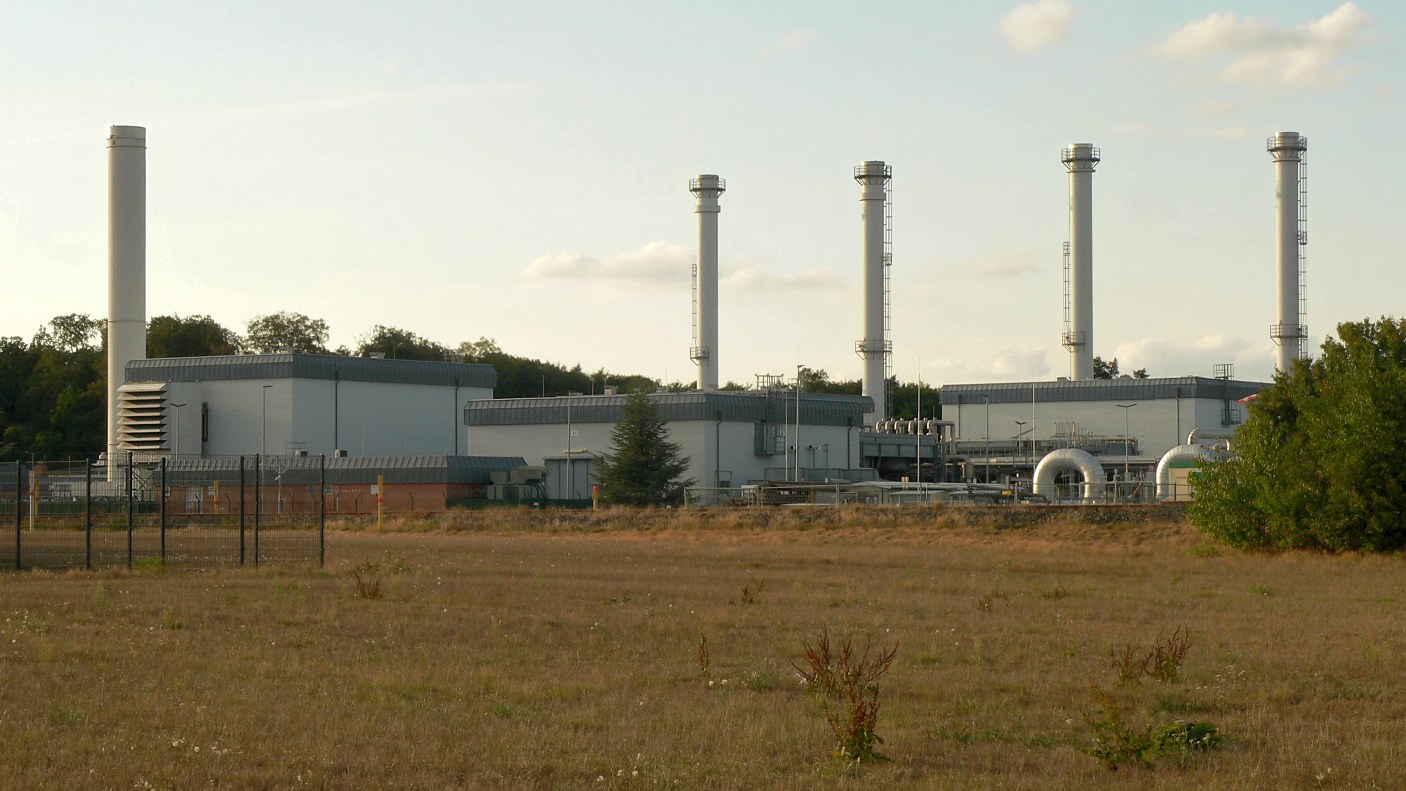
Germany’s natural gas storage sites did not reach their legal fill levels for 1 November, Bloomberg reported on Sunday 1 November, leaving the country with a smaller reserve going into winter. German media and the industry body INES also reported the miss on Sunday; Germany’s economy ministry and the Bundesnetzagentur, the federal network regulator, said gas supply remains secure.
The target. Under Germany’s Gas Storage Fill Level Ordinance (GasSpFüllstV), each storage site must be 80% full on 1 November, except six sites (Bad Lauchstädt, Frankenthal, Hähnlein, Rehden, Stockstadt and Uelsen) that must be 45% full. The ordinance sets no single national figure; tagesschau.de and MDR said the requirements work out at an average of about 70%, which is also the figure Bloomberg used. A second checkpoint falls on 1 February, when most sites must be 30% full and four sites (Bierwang, Breitbrunn, Inzenham-West and Wolfersberg) 40%. The ordinance expires on 31 March 2027.
Where storage stands. Bloomberg, citing Gas Infrastructure Europe (GIE) data, said German reserves were 61.17% full on Friday 30 October, and that the economy ministry had said that day the target would not be reached. Later AGSI+ figures compiled by the data site gasspeicher.app put the level at 61.03% on 31 October and a provisional 60.90% on 1 November, which the site noted had not yet been confirmed by AGSI+. Other outlets quoted 61.2% (tagesschau.de) and 61.5% (INES), depending on the gas day used. The same data show 151 terawatt-hours (TWh) in store against a capacity of 247 TWh.
Against last year and the EU. On the same data, Germany’s level on 1 November 2025 was 75.13%, so this year’s is about 14 percentage points lower. EU storage overall was 74.54% full on 1 November, against 82.81% a year earlier; Bloomberg gave the EU average as 75%. gasspeicher.app said Germany’s level is 11.5 points below the lowest value for that date in the past ten years of AGSI+ data (72.4%, in 2021). Reuters described German levels as at record lows ahead of the season, and Michael Kellner, an energy spokesman for the Greens, said they are “as low as never before”. In the same comparison, gasspeicher.app listed Poland at 99.2%, Italy at 91.1% and France at 86.7%.
Why filling lagged. Reuters said the main driver has been the Iran war and its effect on prices, which made filling caverns over the summer uneconomical. Bloomberg said authorities had stepped up purchases through the state-owned energy company SEFE over the past month. The economy ministry told n-tv that SEFE was instructed to buy and store 8 TWh within about two months, sourced as far as possible from outside the EU. Italy’s energy ministry official Alessandro Noce said on Thursday that Germany had delayed filling its stores and contributed to higher prices; the German economy ministry called the claim “unfounded” on Friday.
Prices. Bloomberg said European gas futures rose above €100 per megawatt-hour last week for the first time since 2022. Reuters said prices are around three times higher than before the Iran war began in late February. Tindex data showed the Dutch TTF benchmark at about €104 per megawatt-hour at the Friday 30 October close, and at the same level on Monday 2 November.
What officials said. A spokeswoman for Economy Minister Katherina Reiche said: “Germany’s gas supply is secure for the coming winter, even with the current storage levels.” She said supply depends not only on storage but also on actual withdrawals, ongoing imports and additional precautionary measures, and, as Bloomberg reported, that supply sources are now more diversified than at the start of the energy crisis, with gas coming through Norwegian pipelines, LNG terminals and neighbouring countries.
The Bundesnetzagentur said it continues to consider the risk of a stressed gas supply low. Its president, Klaus Müller, told Reuters: “It is no longer essential for a secure gas supply that the storage targets be met”, pointing to Germany’s LNG terminals. He added: “But gas has become considerably more expensive. All customers need to be aware of that unfortunately.” Tim Kehler, a board member of a German gas and water industry association, told tagesschau.de there are no sanctions for missing the targets, which he called a safety net, and that traders have stored the gas they ordered for customers this winter.
What critics and the storage industry said. INES managing director Sebastian Heinermann called the miss a “serious warning” and said Germany is entering the heating season “with smaller safety reserves”, which raises vulnerability in the event of very low temperatures or import disruptions. INES, which represents storage operators, published a joint position paper with the gas grid operators’ association FNB Gas and welcomed the economy ministry’s openness to discussing an obligation on suppliers to use storage. MDR reported INES’s calculation that an extremely cold winter could bring shortfalls, with very low levels at the end of winter the most critical. Kellner said: “Every cold front, every small disruption in the supply chain will immediately lead to higher gas prices.”
MDR reported that the economy ministry plans to let the fill-level requirements lapse and instead build a national gas reserve over several years. The draft sets it at 24 billion kilowatt-hours, about 10% of current storage capacity, financed by a levy on the gas price.
Weather. Bloomberg, citing meteorologist Matthew Dross of Vaisala, said temperatures in Berlin, Frankfurt and Munich are expected to run 2C to 4C below normal in the coming days, with frost possible in the south and east according to the German weather service DWD, and a calm, cloudy high-pressure pattern with little wind that can reduce wind and solar output. DWD’s 10-day outlook issued on Sunday described mostly calm autumn weather, with fog at night and light frost in places, minimum temperatures of 3C to minus 4C on Thursday night and daytime highs of 3C to 11C from Wednesday to Friday.
For related background on gas supply, see our report on the Qatari LNG carrier Al Mayeda.
Sources
- Germany Misses Gas Storage Target as Cold Snap Sets In · Bloomberg (via Energy Connects)
- Füllstandsvorgaben bei Gasspeichern nicht erreicht · tagesschau.de
- Gasspeicher nicht gut gefüllt – und nicht alle sehen das entspannt · MDR (Reuters/dpa)
- Germany must do more to boost gas reserves as storage levels hit record low, lobby group says · Reuters (via Euronext)
- Ministry insists gas supply is secure as Germany misses storage target · dpa-AFX (via Yahoo)
- Gas Storage Filling Targets Missed: INES Sees Need for Action on Winter Preparedness · Initiative Energien Speichern (INES)
- Gasspeicherfüllstandsverordnung (GasSpFüllstV), § 1 · Federal Ministry of Justice (gesetze-im-internet.de)
- Gas storage levels in Germany and the EU (AGSI+ data, 31 October and 1 November 2026) · gasspeicher.app (data: Gas Infrastructure Europe, AGSI+)
- Germany rejects 'unfounded' claims in spat with Italy over gas storage · Reuters (via Yahoo Finance)
- Bundeswirtschaftsministerium weist Italiens Vorwürfe zum Gas-Konzern Sefe zurück · n-tv.de
- 10-Tage-Vorhersage für Deutschland (issued Sunday 1 November 2026, 12:50 CET) · Deutscher Wetterdienst (DWD)
- Dutch TTF Natural Gas price, 2 November 2026 · Tindex
Follow us on X for updates: @TruthNetwork26
Related coverage
All business and finance →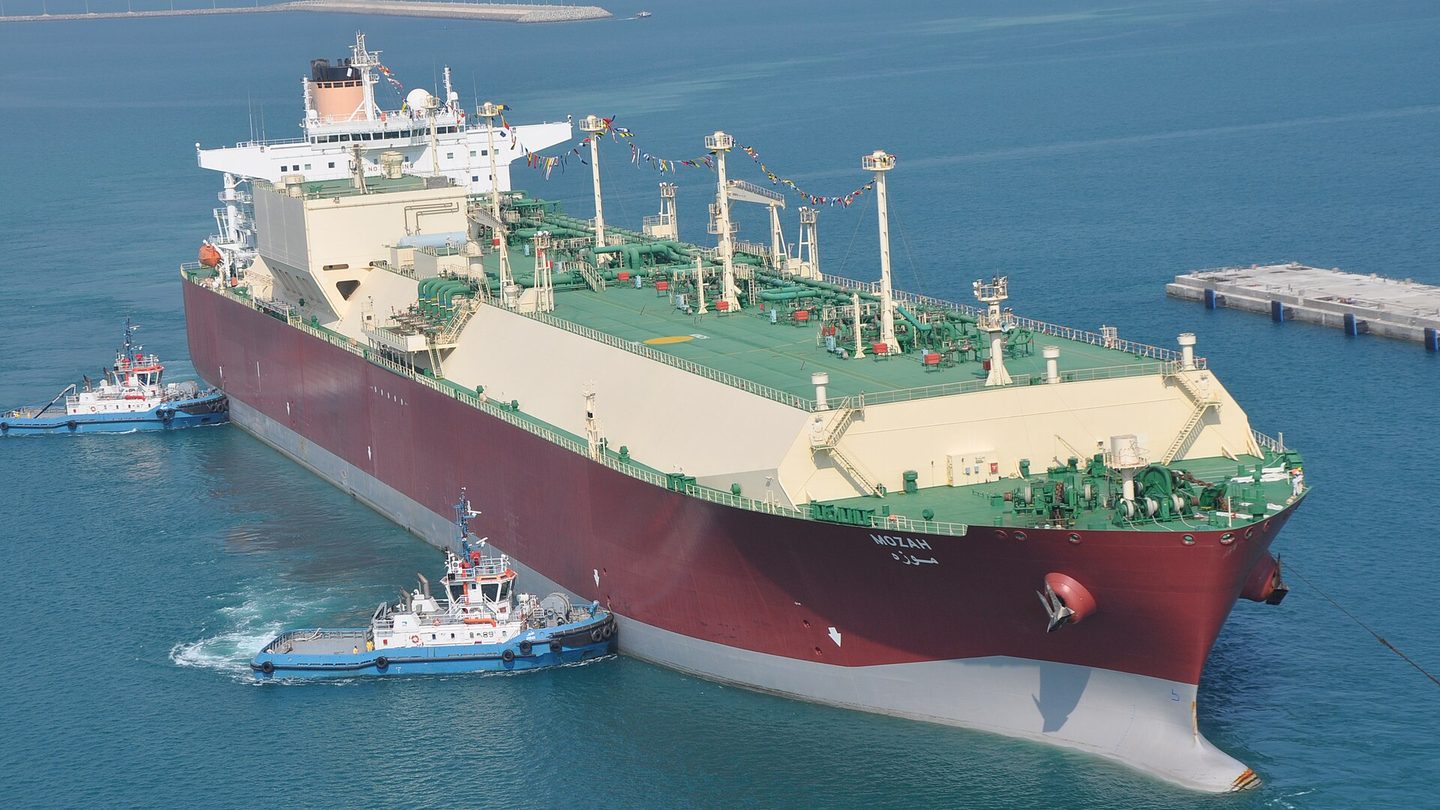
Qatari LNG carrier Al Mayeda hit by 'unidentified objects' in the Gulf; Doha condemns 'dangerous act'
Qatar Gas Transport Company (Nakilat) said its liquefied natural gas carrier Al Mayeda was struck by unidentified objects while sailing in the Gulf on Friday evening. No crew were hurt and the ship remains operational. Qatar's Foreign Ministry condemned the attack and said it is investigating who was responsible.
Putin tells Moscow gas summit the EU is falling into its own 'pit' by dropping Russian gas; Iran's Pezeshkian says US sanctions threaten energy markets
Hosting the Gas Exporting Countries Forum summit in Moscow on Tuesday, Vladimir Putin said Europe's decision to abandon Russian energy was damaging its own industry. Iranian President Masoud Pezeshkian told the summit that US sanctions and military action in the Gulf endangered global energy security.
European shares rise 0.8% as oil eases; Genmab jumps 12% and German business sentiment hits highest since May 2023
The STOXX Europe 600 closed at 640.66 on Monday. Germany's Ifo business climate index rose to 90.2 in October, and Spanish shares with large Brazilian operations fell after Brazil's presidential runoff.
European shares close mostly lower; Paris CAC 40 falls 0.38% as French unrest continues
The CAC 40 led declines among major European indices on Tuesday, while Spain's Ibex rose and Germany's DAX closed almost flat.

Timor-Leste expects to sign first Greater Sunrise gas agreements early next year, Ramos-Horta says
The president told the ABC the long-delayed project with Woodside is 'finally happening'. Analysts and industry sources quoted by the ABC said a final investment decision is still likely years away.
US envoys propose Europe resume buying Russian gas as part of Ukraine peace plan, NYT reports
The White House said its plan includes "economic incentives" for Russia and Ukraine. German officials oppose the idea, according to the report. The Kremlin said it would suit Europe.