Russian military satellite makes close approach to Finnish-built radar satellite, trackers say
Space-tracking firm LeoLabs said Cosmos 2612's movement appeared to be a deliberate approach toward ICEYE-X36. Trackers said the two passed within a few hundred metres or less on Sunday and that Cosmos 2612 has since moved away. Russia has not commented.
Update, 11:07pm GMT Monday: Adam Marsh, vice-president of technical solutions at LeoLabs, told Ars Technica that as of Monday Cosmos 2612 was moving away from ICEYE-X36 at a relative speed of about 17 km/h, and that it was the first time the company had seen a rendezvous of this kind in low-Earth orbit without the other operator’s consent. An ICEYE US spokesperson told Ars Technica: “We are aware of the situation and tracking it closely. Our constellation architecture is designed for continuity and resilience.” Ars Technica said there were no reports of physical damage to ICEYE-X36, which is owned by ICEYE’s US subsidiary. The tracking site Orbinauts, which runs the published Space-Track orbital data through the standard SGP4 model, calculated that Cosmos 2612 was about 360 km behind ICEYE-X36 at 12:00 UTC on 19 October (12pm GMT Monday), with the gap growing by about 350 km a day. No statement from Finland’s government, Russia’s Defence Ministry, Roscosmos, USSPACECOM, ESA or NATO had been reported as of 11:07pm GMT.
Update, 9:07pm GMT Monday: ICEYE, the Espoo-based operator of ICEYE-X36, told Radio Free Europe/Radio Liberty on Monday: “We are aware of the situation and tracking it closely.” The company had earlier declined to comment to Axios. LeoLabs said on Monday that the encounter “was not a routine conjunction or ‘fly by’” and that the behaviour was “consistent with sophisticated rendezvous and proximity operations”, RFE/RL reported. It also reported that Major General Michael Traut, head of Germany’s space command, had described the Russian spacecraft as “chasing” the ICEYE satellite. No statement from Finland’s government, Russia’s Defence Ministry, Roscosmos, USSPACECOM, ESA or NATO had been reported as of 9:07pm GMT.
Update, 7:13pm GMT Monday: Cosmos 2612 has moved away from ICEYE-X36, satellite trackers say. Jonathan McDowell, who compiles the GCAT catalogue of launched objects, wrote on X at 5:21pm GMT that after two days in close proximity (“less than 5 km, possibly much less”), Cosmos 2612 moved away from ICEYE-X36 on 18 October and is “now more than 100 km away, according to US Space Force tracking data”. SpaceNews reported that the US space-tracking company LeoLabs estimated Cosmos 2612 had come within roughly 500 metres of the ICEYE satellite before moving away. No statement from ICEYE, Finland, Russia’s Defence Ministry, Roscosmos, USSPACECOM, ESA or NATO had been reported as of 7:13pm GMT.
Update, 3:25pm GMT Monday: The tracking site Orbital Radar listed a closest approach (TCA) between Cosmos 2612 and ICEYE-X36 at 16:07 UTC on 19 October (4:07pm GMT Monday 19 October), with a computed miss distance of about 26 metres, relative speed near zero and altitude about 541 km. It says its figures “describe a close pass, not a collision prediction”. Satellite tracker Marco Langbroek wrote overnight that the satellites were then several kilometres apart and that the exact distance of Sunday’s closest approach was hard to establish because Cosmos 2612 manoeuvred around that pass, but that it was “certainly < 200 meter, perhaps much closer”. No statement from ICEYE, Finland, Russia’s Defence Ministry, Roscosmos, USSPACECOM, ESA or NATO had been reported as of 3:25pm GMT.
Update, 10:08am GMT Monday: Satellite tracker Marco Langbroek wrote on Monday that orbital data showed Cosmos 2612 made another manoeuvre at about 12:26 UTC on 18 October (12:26pm GMT Sunday). He said it “could either be to bring the satellite further away from the target, or the first of a set of phasing manoeuvers for a future new approach”. No statement from ICEYE, the Russian government or the Finnish government had been reported as of 10am GMT.
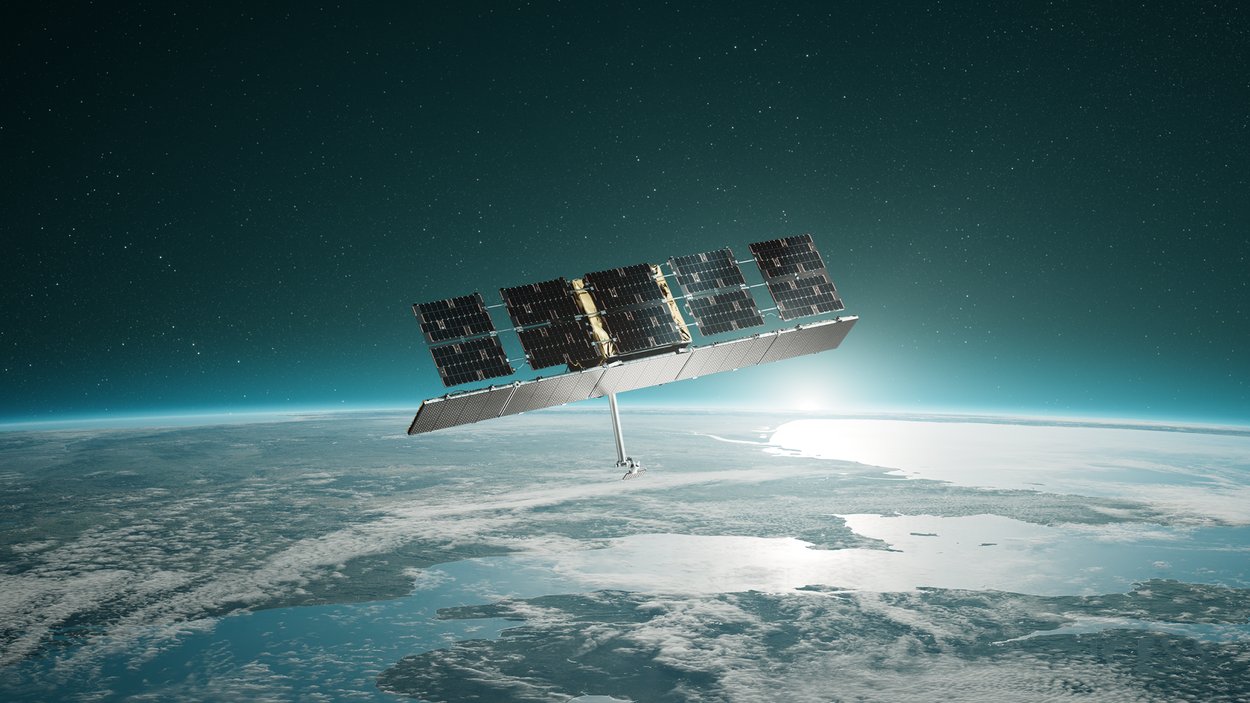
Russia’s Cosmos 2612 military satellite has moved to within a few hundred metres or less of ICEYE-X36, a commercial radar satellite built by the Finnish-founded company ICEYE, according to the space-tracking company LeoLabs and independent satellite trackers.
LeoLabs said on Friday 17 October that the Russian satellite’s movement “appears to be a deliberate approach toward” ICEYE-X36, Axios reported. It said the two were about 5km (3 miles) apart that afternoon, after being more than 320km (200 miles) apart a day earlier. “While the intent remains uncertain, the behavior warrants continued monitoring,” the company said.
Marco Langbroek, a satellite tracker and lecturer at Delft University of Technology, wrote that a close approach took place at about 01:35 UTC on Sunday 18 October, “within a few hundred meters or possibly (much) closer”. He said there were “no indications” from orbital data that ICEYE-X36 had been hit, and that whether it still works “only the users can tell us”. The tracking site Orbital Radar, which calculates passes from published orbital data, listed further passes within tens of metres due late on Monday 19 October UTC. It says its figures “describe a close pass, not a collision prediction”.
ICEYE and the US Defense Department declined to comment, Axios reported. Russia has not disclosed Cosmos 2612’s mission, The Hindu reported. No comment from the Kremlin, Russia’s Defence Ministry, the Russian space agency Roscosmos or the Finnish government had been reported as of 10pm GMT Sunday.
Clayton Swope of the Center for Strategic and International Studies (CSIS) in Washington described the two satellites to Axios as “bumper-to-bumper”. In an analysis published on 15 October, CSIS said “policymakers should assume Cosmos 2612 could take an action that threatens the commercial satellite.”
Background
Cosmos 2612 was one of six Russian military satellites launched from Plesetsk on 16 April 2026. According to CSIS, five of them changed orbit in May to match ICEYE-X36’s orbital plane, and Cosmos 2612 began new manoeuvres on 30 September. ICEYE-X36 was launched in March 2024. Finnish media report it is registered in the United States through ICEYE’s US arm. In January, ICEYE signed an agreement with a customer within Ukraine’s Defence Ministry. A Ukrainian official told Axios that Ukraine’s military uses ICEYE data but that it was unclear whether this satellite supports Ukraine. In May, the US Space Force said Russian satellites were near a “Western commercial radar satellite used by Ukraine for imagery intelligence”, Axios reported. In October 2022, Russian diplomat Konstantin Vorontsov told the United Nations that commercial satellites used in conflicts could become “legitimate targets” for retaliation, Yle reported. The Hindu reported that no international rule sets a minimum distance between satellites; the 1967 Outer Space Treaty requires states to act with “due regard” for the interests of others.
Sources
- Russian space satellite approaches U.S. satellite, raising alarms about intent · Axios
- Could Russia Be Poised to Use an On-Orbit Weapon Against a Commercial Satellite? · Center for Strategic and International Studies (CSIS)
- Marco Langbroek on X: another manoeuvre by KOSMOS 2612 (19 Oct 2026) · Marco Langbroek (SatTrackCam Leiden)
- Marco Langbroek on X: current separation and Sunday pass distance (19–20 Oct 2026) · Marco Langbroek (SatTrackCam Leiden)
- KOSMOS 2612 and ICEYE-X36: a worrisome cat-and-mouse-game in Space · SatTrackCam Leiden (Marco Langbroek)
- Russia's close approach to commercial satellite raises alarm · SpaceNews
- Jonathan McDowell on X: Kosmos-2612 moved away from ICEYE X36 (20 Oct 2026) · Jonathan McDowell
- COSMOS 2612 ⟷ ICEYE-X36: close approach · Orbital Radar
- Russian military satellite makes 'close approach' to U.S. radar satellite in orbit · The Hindu
- Russian satellite's movements raise concern (in Finnish) · Helsingin Sanomat
- Video shows how a swarm of Russian military satellites grouped on a Finnish satellite's orbit (in Finnish) · Yle
- Star Wars: A Russian Military Satellite Gets Very, Very Close To One Used By Ukraine · RFE/RL
- Russian spacecraft maneuvers in "extreme proximity" to satellite used by Ukraine · Ars Technica
- The Russian satellite that flew 5 km behind an ICEYE radar satellite has manoeuvred away from it · Orbinauts
Related coverage
All world news →
Finnish Prime Minister Petteri Orpo visits Kyiv and meets Zelensky; Finland announces €2 million in humanitarian aid
Finland's government said the visit was meant to show its support for Ukraine as the country prepares for winter. Finland's Foreign Ministry announced €2 million in humanitarian aid, and a ballistic missile alert was issued in Kyiv during the visit.
Zelensky tells The Diary of a CEO a ceasefire on current lines is a 'huge compromise'
In quotes posted on X from his interview with Steven Bartlett, Ukrainian President Volodymyr Zelensky said a ceasefire is "the only step" because "people's hatred isn't going anywhere", and said Trump should adopt towards Putin the rhetoric he uses about him.

After Oslo talks, Zelensky says Ukraine backs US energy ceasefire proposal; Witkoff to take ideas to Russia
Volodymyr Zelensky met US envoy Steve Witkoff in Oslo with Norway's prime minister and Finland's president. Zelensky said Ukraine is ready for negotiations and proposed a trilateral leaders' meeting; Norway's Jonas Gahr Støre said Witkoff would fly to St Petersburg on Wednesday.
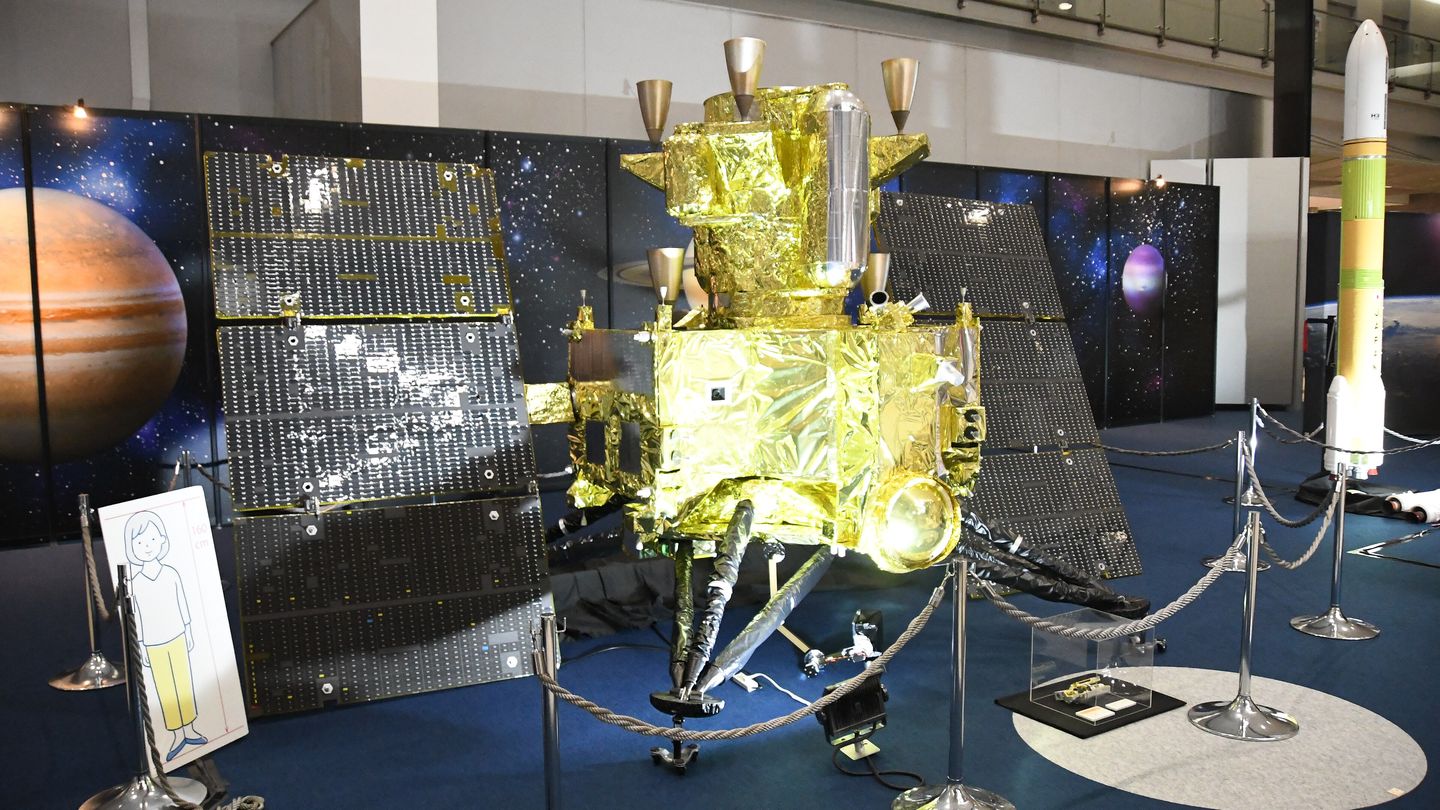
Japan launches MMX spacecraft to bring back samples from Mars' moon Phobos
JAXA's Martian Moons eXploration spacecraft lifted off on the 10th flight of the H3 rocket from Tanegashima early on Tuesday Japan time and separated from the rocket as planned about 71 minutes later. It is due to reach Mars in August 2027.

Trump says his Russia sanctions decision is meant to keep Moscow at the negotiating table
The President said signing "that document" now would drive Russia away from "the bargaining table". Treasury Secretary Scott Bessent said the measures were paused, not lifted; Ukraine's President said the waiver strengthens Russia.
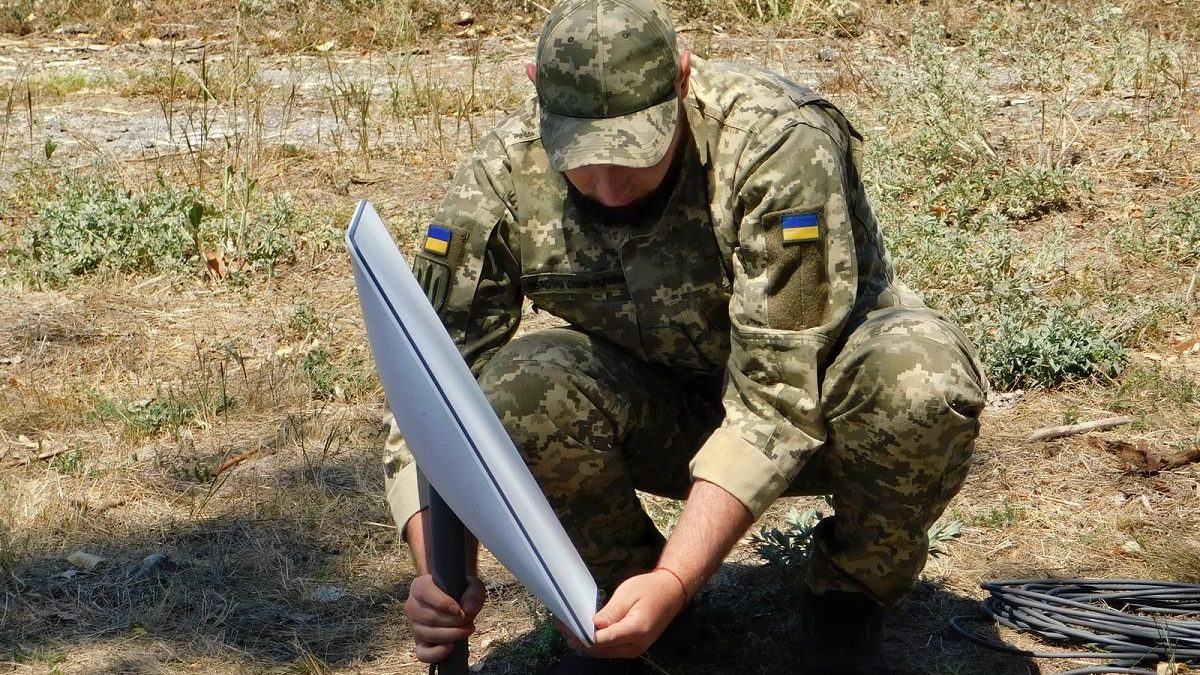
Ukraine says Starlink speed limits still affect drones; US officials deny ordering them
Zelensky said tests on EU territory showed no such limits. Trump and Rubio said the White House did not order the restrictions.